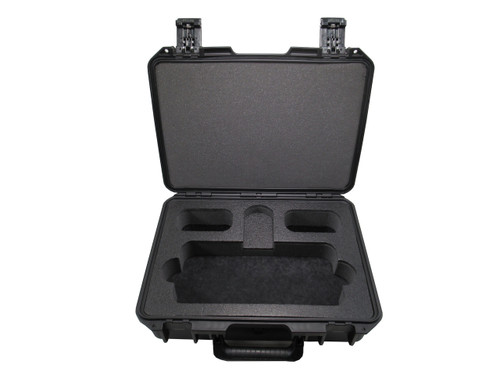
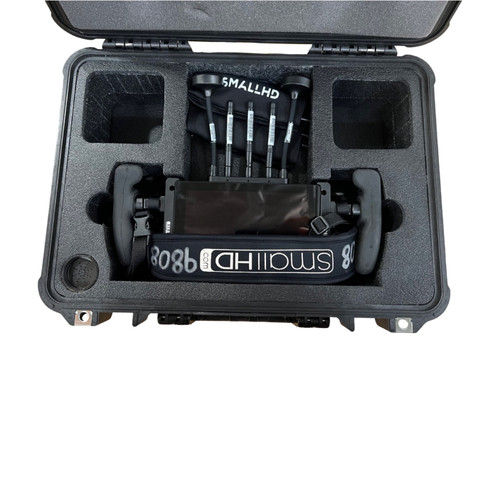
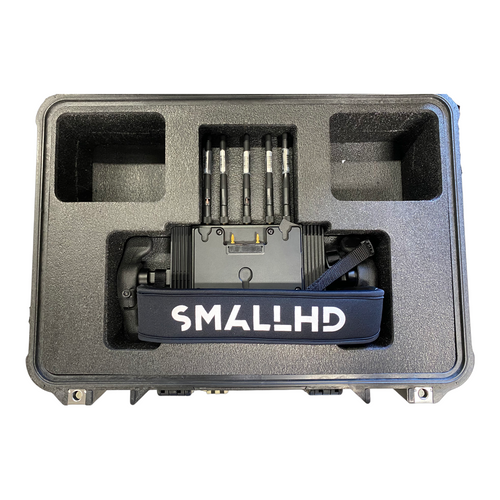
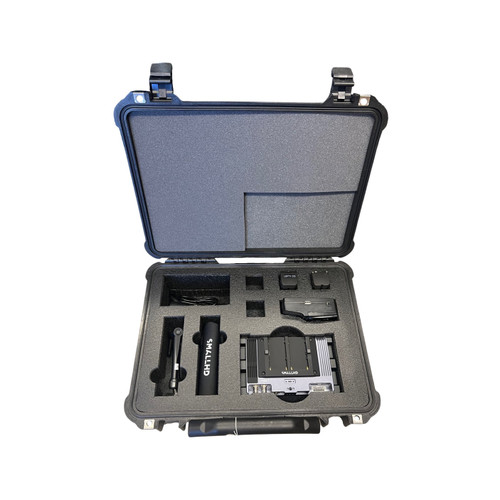
An injection-molded monitor case is a professional molded shell — Pelican, Pelican Storm, Pelican Air or SKB — with a foam interior that Innerspace CNC-cuts around your exact monitor and the accessories that travel with it. The shell is a proven, replaceable, off-the-shelf part. The inside is the custom engineering.
Why the molded route
- Weight. A molded shell is materially lighter than a fabricated ATA case of similar capacity, which matters when a single operator carries it.
- Water and weather. Pelican Protector and Pelican Storm shells are IP67 rated by the manufacturer. We publish that rating only on builds using a shell the manufacturer actually rates — it is a property of the shell, not of our foam.
- Air travel. Several shells in this range are carry-on sized. Where a build uses one, the product page says so explicitly rather than leaving you to check dimensions against an airline table.
- Replaceable shell. If a shell is destroyed on a shoot, it is a catalog part. The foam interior is on file and can be re-cut to the same drawing.
- Repeatable fleet builds. Standardized shell plus a saved CNC program means unit twelve is identical to unit one.
Who chooses molded
Field production crews, camera departments, DITs, directors carrying their own monitor, owner-operators, traveling technicians, and smaller rental packages. In practice: if the monitor is roughly 24 inches or under, travels with one person, and flies, this is usually the right construction.
How the foam protects the display
The panel face is the vulnerable surface, so the monitor cavity is cut to seat the display without foam bearing on the glass under compression — the load is carried at the bezel and the chassis. Accessories get their own separated pockets rather than sharing a cavity, so a battery cannot migrate into the panel in transit. Cable, power block, hood, receiver and mounting-plate storage are cut as discrete wells, with finger pulls at the lift points so nothing is levered out by its cable.
When to step up to a fabricated ATA case
When the display is too large for any stock shell, when the package includes a yoke or stand that stays attached, when you need wheels on a case that big, or when the exterior dimensions have to hit a specific number. Compare fabricated ATA monitor cases.